
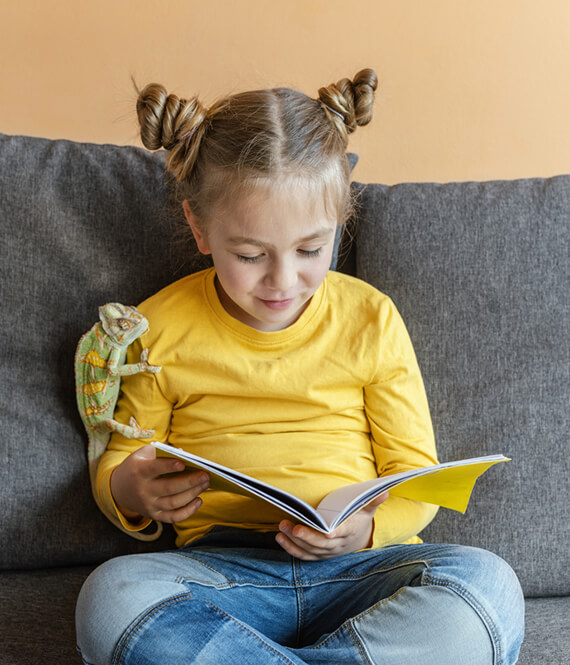
Nowadays, we can get books everywhere – from your local library, online bookstores, used bookstores, and thrift shops.
But when it comes to educational books for kids, how do you choose the right ones?
How do you make sure it is appropriate for your child?
Let’s take a look at a few important aspects to think about when getting a new book for your loved one.
1. Social-Emotional Learning
Choosing the right educational books for your child’s age and learning level helps them succeed academically.
Besides traditional academic skills such as reading, writing, and math, parents should prioritize social-emotional learning (SEL) when selecting materials for their children.
SEL is an important component of a well-rounded education.
It helps children understand their emotions and develop the skills to build healthy relationships.
To ensure your child has access to educational materials supporting academic learning and SEL, look for books featuring diverse characters, encouraging critical thinking skills, and emphasizing self-care activities.
For younger children, Tuttle Twins toddler books provide a mix of entertaining stories and activities that help them explore concepts such as counting, shapes, colors, and the alphabet.
Uncovering educational themes in stories also promotes language development and encourages curiosity.
Children may be ready to delve deeper into history and science as they age.
2. Study the Front Cover and Blurb
Parents should study each book’s front cover and blurb to determine if it suits the reader.
The front cover and blurb provide much information about the book. If it says “Age 8+” or “Grade 4-6,” it is likely too advanced for younger readers.
But, if it states that the book is for early readers, it may be too simple for older children.
Read book reviews and find out what other parents or teachers think.
It gives you insight into how the book has been received, who it might be suitable for, and whether there are potential issues with the content.
3. Consider the Learning Level
The book should be challenging enough to help them learn but not too difficult to frustrate them.
Ensure the book has engaging content and illustrations to capture their interest.
If your child is reluctant, find books with interesting characters or stories that pique their curiosity.
Also, look for books that discuss topics relevant to your child’s age or life experiences.
Books are pivotal in teaching children how to navigate different situations in life.
4. Consider the Child’s Interests
Consider their interests and get them a book that they will enjoy reading.
If you need help with what to get, ask your child for their opinion or ask them to help you pick out a book.
You could also tag them along if you plan on shopping in person.
You should also consider the type of book you’d like to get your child.
If they’re an avid reader, you should get them a classic novel or series such as Goosebumps or Harry Potter.
They might enjoy history or science books if they’re more into nonfiction.
If you’re looking for something unique and different, get them a graphic novel or comic book.
Graphic novels are fun and educational, while comics feature superhero stories and humorous tales.
You should recognize that your child may have different tastes from yours.
As they get older, find out what authors and books they like and get them something similar.
5. Length of the Book and Genre
Short books may be better for someone who doesn’t have much time to spend reading, while longer books are perfect for those who have the patience and dedication to sit and enjoy a book.
Consider what type of reader your child is when choosing their books.
If they are new to reading, start with simpler stories until they get familiar with the genre and writing styles.
6. Engaging Plot Lines
When selecting books, look for stories with engaging plot lines to draw readers in.
Focus on stories with complex and compelling characters with interesting arcs throughout the book.
Intricate subplots and themes give the reader a unique perspective and make them reflect on the story.
Additionally, look for stories written in a way that is easy to follow and understand.
Finally, feel free to try something out of your comfort zone.
There are many genres of literature, and reading something new might surprise you!
Summary
Let’s conclude!
- Younger children love storybooks with colorful illustrations and fun characters.
- Older kids enjoy complex books that challenge their minds.
- Look for books that introduce new concepts and encourage critical thinking skills.
- Find books focusing on positive values like self-confidence, teamwork, or kindness.
- Books with a strong narrative keep children engaged and excited to read the story.
Choosing the right books for your child will keep you and your little one engaged and happy. Have fun!

Hi! I am author + writer on personal development, beauty, relationships and self-care, sharing insights through this blog since 2018. After years of practicing personal growth, emotional wellness and feminine lifestyle (plus 19 years in a thriving relationship), I share effective and tested advice to help you foster beauty, self-improvement and order in your life. Some articles are written by a small team of beautiful writers I trust.












Leave a Comment