
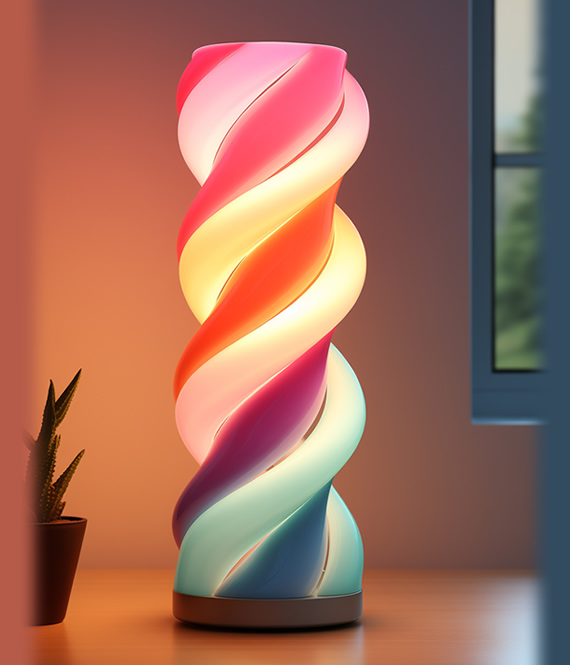
When it comes to creating unique and captivating lighting fixtures, plastic has become an indispensable material. Its versatility and ease of manipulation make it ideal for crafting bespoke designs that can transform any space.
Whether you’re a DIY enthusiast or a professional designer, understanding the various techniques for moulding and shaping plastic can open up a world of creative possibilities.
In this guide, we delve into these techniques and explore how you can use them to create stunning lighting fixtures that stand out.
Thermoforming: Shaping with Heat
Thermoforming is one of the most popular techniques for shaping plastic. This process involves heating a plastic sheet until it’s pliable, then moulding it over a form.
To get started, you’ll need a heat source, such as an oven or a heat gun, and a mould of your desired shape.
Carefully heat the Perspex sheet until it becomes flexible, then drape it over the mould, applying even pressure to ensure it conforms to the desired contours.
Once it cools, it will retain the shape of the mould, ready to be incorporated into your lighting design.
CNC Machining: Precision Cutting and Shaping
Computer Numerical Control (CNC) machining is a technique that uses computer-controlled tools to cut and shape plastic.
This method offers high precision and is ideal for creating intricate designs and components for your lighting fixtures.
With CNC machining, you can achieve complex shapes and patterns that would be difficult to produce by hand.
This technique is particularly useful for creating custom Perspex lighting pieces that require exact dimensions and detailed craftsmanship.
Whether you’re cutting out decorative panels or shaping unique lamp bases, CNC machining provides the accuracy and repeatability needed for professional results.
Injection Moulding: Precision and Detail
For more complex shapes and detailed designs, injection moulding is an excellent technique. This method involves injecting molten plastic into a pre-designed mould. It’s widely used in manufacturing but can also be applied in custom lighting fixture creation.
To use injection moulding, you’ll need specialised equipment, including an injection moulding machine.
This process is perfect for creating multiple identical components, such as lamp bases or decorative elements for your lighting fixtures.
The precision and consistency offered by injection moulding make it ideal for achieving professional-quality results.
Laser Cutting: Intricate Designs Made Easy
Laser cutting is a technique that uses a focused laser beam to cut or engrave plastic materials. This method is perfect for creating intricate designs and patterns on Perspex sheets, adding a touch of sophistication and uniqueness to your lighting fixtures.
To use laser cutting, you’ll need access to a laser cutter, which can be found in many maker spaces and professional workshops.
The precision of the laser allows you to create detailed designs with clean edges, making it ideal for crafting decorative elements and custom shapes for your lighting projects.
Closing Remarks
Creating unique lighting fixtures from plastic is an art form that combines creativity with technical skill.
Whether you’re using thermoforming, injection moulding, vacuum forming, CNC machining, or laser cutting, each technique offers distinct advantages that can help bring your design ideas to life.
By mastering these techniques and experimenting with their combinations, you can craft stunning lighting fixtures that illuminate your space with style and personality.

Hi! I am author + writer on personal development, beauty, relationships and self-care, sharing insights through this blog since 2018. After years of practicing personal growth, emotional wellness and feminine lifestyle (plus 19 years in a thriving relationship), I share effective and tested advice to help you foster beauty, self-improvement and order in your life. Some articles are written by a small team of beautiful writers I trust.











Leave a Comment