
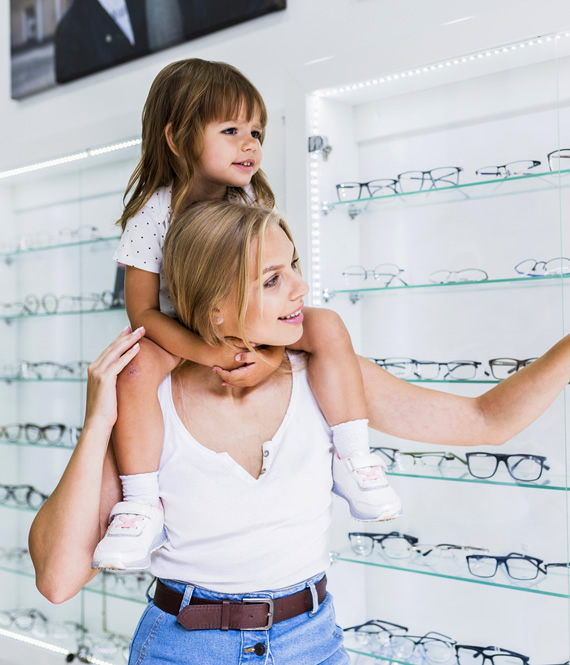
If you’re reading this article, you may be seeking information about myopia in children (also known as nearsightedness in children) because of a recent diagnosis in your family or simply due to an interest in learning more.
Rest assured, you’ve come to the right place.
In this article, we aim to provide clear, actionable information about myopia – an increasingly prevalent condition.
What Is Myopia?
Myopia, also known as nearsightedness, affects an individual’s ability to see distant objects clearly while close objects remain sharp.
It occurs when the eye’s physical length is greater than its optical length.
In simpler terms, it’s when the eye grows too long, and the light rays focus in front of the retina rather than directly on it.
Myopia in children or adults usually presents with symptoms like blurry vision at a distance.
Some people may also experience headaches due to eyestrain.
The condition can vary in severity and progression, with some cases developing gradually and others manifesting more suddenly.
In severe cases, known as high myopia or pathological myopia, people might be at increased risk of serious eye conditions such as retinal detachment or glaucoma.
While most cases of myopia are typically diagnosed in childhood, it’s important to note that not all are present from birth.
Why Myopia Matters
According to recent estimates, nearly 30% of the global population is affected by myopia.
By 2050, this number is projected to reach 50%, translating to approximately 5 billion individuals.
Alarmingly, the majority of these cases (about 70%) might be diagnosed as myopia in children aged 5-16 years.
Regions such as East and Southeast Asia are especially impacted by myopia, with prevalence rates nearing 80%.
In the U.S., prevalence rates have nearly doubled over the past three decades to 42%.
Given these statistics, it is crucial to understand the risk factors for myopia and the steps one can take to mitigate them.
Lifestyle Modifications to Manage Myopia in Children
While treatment for myopia typically involves corrective lenses and in some cases eye drops or surgical interventions, there’s an adage that remains true: prevention is better than cure.
Here are some lifestyle modifications that can help manage myopia in children.
1. Prioritize a Healthy Diet
Eating a well-balanced diet is essential not just for general health but also for maintaining good eye health.
Certain foods are particularly beneficial for eyesight, including those high in vitamin A, such as carrots, bell peppers, and spinach.
Carrots contain beta-carotene, which the body converts into vitamin A – a crucial nutrient for maintaining healthy eyes and vision.
Bell peppers and spinach, on the other hand, are packed with lutein and zeaxanthin.
These antioxidants protect the eyes from harmful light and oxidative stress.
In addition to these, a diet that includes green leafy vegetables, fish, eggs, and fruits can contribute to overall well-being and support the health of the eyes.
Fish, especially oily ones like salmon, are rich in omega-3 fatty acids that are known to help maintain the health of the retina.
Fruits and eggs provide essential vitamins and antioxidants that can help to protect the eyes from damage.
2. Monitor Screen Time
In our digital age, children are often exposed to screens for extended periods, whether for education or recreation.
However, excessive screen time can contribute to eye strain and might increase the risk of myopia.
It is, therefore, vital to encourage children to take regular breaks from screens.
Set limits on the amount of time they can spend on devices each day, and promote other activities such as reading physical books, playing board games, or participating in outdoor activities.
It’s also important to ensure that when children do use screens, they do so in a way that minimizes eye strain.
This includes maintaining an appropriate distance from the screen and using devices in a well-lit area.
3. Outdoor Activities Are Recommended
Outdoor play is not only good for a child’s physical health but also their vision.
Encouraging children to play outdoors can be beneficial for their eyes as it exposes them to natural light and allows them to focus on objects at different distances, promoting the healthy development of vision.
Studies have suggested that spending time outdoors can slow the progression of nearsightedness in children.
To help slow myopia in children, try to ensure that your children get at least 1-2 hours of outdoor time daily, whether it be through structured sports, free play, or family activities.
4. Ensure Adequate Lighting
Good lighting is essential for vision health.
Ensuring your child’s study or play areas are well-lit can help to prevent eye strain, which can contribute to the progression of myopia in children.
Bright, white light is typically the best for activities like studying and reading.
An adjustable desk lamp that shines light directly onto the task can help ensure adequate illumination.
However, caution children to avoid staring directly into light sources, as this can be harmful.
Moreover, when children are using screens, consider employing ambient lighting instead of having a single, focused light source to reduce glare and minimize the contrast between the screen and the surrounding environment.
5. Teach Kids To Take Regular Eye Breaks
Even when engaged in activities that require continuous visual attention, it’s important for children to take regular breaks to relax their eyes.
The “20-20-20” rule is a useful guide here: every 20 minutes, take a 20-second break to look at something 20 feet away.
This practice can help reduce eye strain and fatigue.
You might also encourage children to blink frequently during these breaks to help refresh the eye surface and prevent dryness.
Conclusion
Through these lifestyle adjustments, parents can play an active role in managing the progression of myopia in children.
Remember, while these measures can help manage the risk and progression of myopia, they are not guaranteed to prevent it.
Regular eye check-ups are essential, especially for children, to catch any vision problems early.

Hi! I am author + writer on personal development, beauty, relationships and self-care, sharing insights through this blog since 2018. After years of practicing personal growth, emotional wellness and feminine lifestyle (plus 19 years in a thriving relationship), I share effective and tested advice to help you foster beauty, self-improvement and order in your life. Some articles are written by a small team of beautiful writers I trust.











Great wordpress blog here.. It’s hard to find quality writing like yours these days. I really appreciate people like you! take care
Youre so cool! I dont suppose Ive learn anything like this before. So nice to seek out anyone with some unique thoughts on this subject. realy thank you for beginning this up. this website is something that’s needed on the internet, somebody with a little originality. useful job for bringing something new to the internet!